Showing posts with label writers. Show all posts

Tuesday, July 16, 2013

Balancing Parenting, Publishing, and Dog Rescue! #TBSU

Today's post is an emotional check-in for me. Perhaps your feelings will resonate with mine.

Publishing Novels

Carole Remy is a writer, and I created this blog to sell her novels. Sometimes I feel like I really am Carole Remy, the alternate me. Other days I can write about her in the third person. Today is one of the 'other days.'

photo by Anita Peppers
Carole has repeated many steps of the writing process over the past several years. Here's her curve. (Skip the list if you want. It's here as an encouragement to hang in.)

write Beauty of the Beast
quick success with a well-known publisher
write Fantasy Impromptu 
get scared and wait a year to show anyone
more success with the same publisher
write Twelve Nights
do other stuff
write Who Is Candid?
live life
write Ophelie
write the sequel to Ophelie (as yet unpublished)
several years of other stuff
three novels published with indie publisher
ten year gap [meanwhile, Mary Carol Moran, the other me, is writing and studying poetry] 
many poems and two collections nicely published
along comes Kindle! wait several years...
Kaboom! five previously published novels now available on Kindle

What It Means...??

Though seven of my books (novels and poetry collections), have found generous and helpful publishers, mostly I've lived my life doing other things than writing. I'm a binge writer. Maybe some of you can relate. When the mood hits, I write a novel flat out, sometimes in as little as two weeks. Editing takes forever, but I'm one of those lucky writers who actually loves every step of the editing process. Maybe I should thank all those years of revising poems, word by word.

The past has given me enough confidence and life-cushion that, while I love and get excited by book sales, they don't define me. Separating your ego from your artistic creation is almost impossible; I'm nowhere near there! A benefit of having a pseudonym, perhaps, is that Carole Remy's success is a little bit separate from the joy of day to day life.

I figured out early on that writing wasn't likely to bring in a lot of money. [From a Law of Attraction perspective, I have a limiting belief that writing won't bring me the big bucks. Naughty me, but I can live with it. There are worse beliefs.] Over the years, I've made way more money teaching and coaching other writers than I've made from my own books. The fact that Amazon sends a sweet little check every month is a pure fun bonus.

The Power of Distraction

Maybe I'm not really a dedicated writer, or maybe I'm living a balanced life.

Me with my two amazing and lovely daughters!
Raising my children never slipped from being my top priority. As a single mom, that meant finding a job that I loved AND that paid enough to keep us going = teaching. Writing took a back seat. A nice big comfy armchair back seat, but still not in the front row.

For the last six months, I've put the Kindle novels not only in the front row, but in the driver's seat. I've lived, eaten, breathed Amazon, blogging, Facebook, Twitter, Google+, book blog tours, and every other method of building a social platform. It's fun and I love it. But a part of me still understands the value of diversity. My Mom always used to say, "Make sure you always have more than one string to your bow."

With a friend, Marissa Lepe Preciado, and lots of supporters, I'm moving more and more into the consuming realm of dog rescue. Just as dog rescue keeps me from focusing exclusively on book promotion, so the books keep me from submerging tooooo deeply into rescue. Either can easily become all-consuming to the point of burnout. As kids and writing did in years past, now dogs and writing will help me keep life in balance.

I love blogging!

The greatest lesson for me from the last six months is the realization that I truly love blogging! Thank you to every single reader for sharing my life, hopes, depressions, elations, and occasional aha moments. The immediacy of blogging offers satisfactions that even novel-writing lacks. Each genre has its seductions: the world-building of novels, the joy of expressing a precise emotion in poetry, and the back-and-forth instant readership/response of blogging.

by duane j

Yesterday I began a new blog, Friends of RCA Colima, to chronicle the building and ongoing operation of our dog shelter, Refugio Cachorros y Abuelitos (Safe Haven for Puppies and Good Old Dogs). I'll provide links here on this blog, as well as occasional direct updates.

My goal is still to publish at least ten articles a month here on Carole Remy. The focus will shift a little more toward writing, editing, publishing, and building a platform. If you are interested in animal rescue, I invite you to follow my blog Friends of RCA Colima. I'll try for ten posts a month there as well. Another four posts a month, focused mainly on emotional issues, appear every Saturday on Skelations. Lastly, if you prefer or want to brush up your Spanish, the Facebook page for all our animal activities is Amigos de Perros y Gatos Colima.

Thank you!!

Once again, thank you so much for including me in your world. Giant group hugs for everyone! Let me know your thoughts and feelings in the comments! What is your writing arc? Are you more a binge writer, or a steady writer? How do you balance different worlds? I look forward to a lively discussion.


Monday, July 8, 2013

Live in Joy, Today! #TBSU

This past week, I've lived in a different world, immersed in the animal rescue sub genre of spay/neuter. The campaign lasted five days. We spay/neutered about 150 cats and dogs; the camaraderie was joyful; the connection to the four-legged beasts was intense; and the physical exhaustion is still with me.

Why does such an experience come into a person's life? The Law of Attraction states that we attract experiences into our lives through our vibration. Feel joy, get more joy. Feel frustration, get more frustration. I'll go a step further and posit that what happened for me this time is that some interior subconscious nerve center sent out a message that I was ready to learn something more about myself, to peel back another layer of the never finished onion.

Six Months of Bliss

Moving to Mexico in January 2011, where I can't work because of my visa, forced/allowed me to relax from wanting to achieve anything.


I lived happily in the moment, with enough money to live what felt like really well. My pension didn't quite make it through the month in the US (and didn't leave any room to buy health insurance). Suddenly I had plenty to rent a nice house, eat out whenever I wanted, learn salsa dancing and wood sculpture, and hire a wonderful woman to clean. Free top quality health care was an incredible bonus and anxiety reducer!

The Seeds of Wanting More

Then about two years ago, I spent an interval in the lap of big time luxury. Anything I wanted was bought for me. I was taken on a lovely trip, all expenses paid. Returning to Mexico, the seeds of discontent awoke. My beautiful life was exactly the same, but it didn't feel like plenty any more. I began to want the money to start an extensive animal shelter. I began to want, period. An old internal barrier to happiness reawoke.

With the benefit of two years hindsight, I see now that I had already begun to be attracted to seductive friends, ambitious wonderful people who wanted and were attracting fame and fortune. Exactly the people to eventually bring me to my present day awareness.

Putting my Novels on Amazon Kindle

In January 2013, I made the decision to put my backlist novels on Amazon. It was something I'd been thinking about for years, and suddenly the time seemed right. Two of the novels had been quite successful in print, and I saw Kindle as a way to bring in passive income to run an animal shelter.

I threw myself into action, setting up a presence on Facebook, Twitter, and this blog. Formatting the novels for Kindle, and contracting beautiful covers. Dipping my toe in the deep waters of Goodreads (which I still haven't figured out). I loved it. I still love it!

Working is seductive. Anyone who has tried retirement knows this. The temptation to find your identity in what you do, in external monitors of success, is overwhelming.

But...

The harder I pushed, the more elusive external success became. With zero expectations, my first novel shot to #1 on its initial KDP free days. Woohoo! Few sales, but my name was getting out there. Then the KDP free day promotion for the second novel, with high expectations, was a flop. Six months of ten hour days, seven days a week produced only a small check from Amazon every month.

Slowly social networking became a bit of a chore, still fun, but whew! A lot of work. The impulse to push, push, push, began to feel a little off. Then with a huge aha, I realized that I don't need to fund an animal shelter myself. Colima is doing GREAT on the animal rights front, with eleven protection associations and new legislation criminalizing animal abuse. From exactly where I am right now, I can help all I want. Without the financial impulse, the promotion began to feel even more like work.

Ambition is Not Present-Centered

When we focus on future success, we project wanting. From the Law of Attraction, we know that wanting can only bring more wanting. The deeper truth is that even when we get exactly what we prescribe, the Amazon ranking, the agent, the publisher, we will only want more. The movie deal, better promotion of our masterpiece, the billion dollar success of J. K. Rowling. Several well-known authors are good friends. Only one of them, Anne George, was truly happy with her publisher, and Anne was already about the happiest person I knew, surprised and pleased by every publishing success, small or huge.


So why did I attract someone who indulged my unacknowledged desire for wealth? Why have I surrounded myself with dear ambitious friends? Why have I put my novels on Kindle and worked my butt off for six months?

We can only feel JOY right now 

I did all these things because in some corner of my heart, I hadn't completely accepted that living right now is the only joy. A piece of me still believed in the IF-ONLY scenario. If only I had LOTS of money, I'd be happy. If only my novels would sell a boatload of copies, I could help animals. Last week was the final piece of that jigsaw puzzle, when I was neck deep in helping the four-legs, without needing anything other than my presence.

Another impulse toward living in this moment, right now, is my elderly dog. Gemma is twelve, and my desire to travel, to plan fun trips to see relatives and/or exotic places, has been put on hold. Gemma no longer does well when I leave, so I'm not leaving. Simple. Equally disastrous for me is the future scenario of her death. I refuse to spend our last months unhappily anticipating the future without her. Not. Happening. Every hug, every walk, every snore in the middle of the night is pure joy!

What does it all mean?

Last Saturday (July 6, 2013) my guest post on living in the present was published by Skelations. Another take on the same topic will be published there on July 27. I've taken a week off promoting and proven to myself yet again that the sky did not fall. Relaxing now with the physical aches of a sore hip and the remnants of overall exhaustion, a couple of layers of the emotional onion have peeled back.

One realization for me is that I want my novels to be available. I want them out there in the public marketplace. Selling or not selling is nowhere near as relevant as availability. So thank you, Amazon Kindle. Huge thank you! The people who like my novels REALLY like my novels. That's what matters. One reader who writes me because they 'get it' is a lifelong connection that I would miss out on if the novels weren't for sale worldwide.

Another realization is that I can do exactly as much or as little as feels enjoyable in the moment. If I don't post for a few days, so be it. Without pressure, the fun comes back. I really do love tweeting! Thank you to my generous, funny, and loving Twitter friends! Even Facebook is mostly awesome, and I love keeping in touch with people's lives through their photos and updates.

Yet another reminder recently is that I LOVE the intellectual side of writing, reading, and discussing novels. James McAllister and I have started a correspondence about his amazing and complex novel iNation, and I'm loving it! Molly Ann Wishlade and I share ideas and encouragement on our novels all the time. I love reading the thoughtful posts of  Thomas Rydder (My Road to Better Writing), Cassandra Page (Writing), Kristen Lamb (everything!), James McAllister (iNation), and many, many more wonderful writer bloggers!

Anyone who would like to talk novels, contact me! Huge advance hugs!

I don't want anything!

The final layer for me is to say happily and openly, I don't want anything!! Woohoo! Repeat after me, I don't want anything! I don't want ANYTHING! Life right this instant, this very second, is complete and amazing and plenty.

link to the recipe on The Furious Pear Pie blog

“I got the blues thinking about the future, 
so I left off and made some marmalade. 
It’s amazing how it cheers one up 
to shred oranges and scrub the floor.” 
D. H. Lawrence

Please join me for a lively discussion of all things writing and publishing, or whatever else you'd like to talk about! I look forward to your comments.

Check out these related posts on writing and publishing:
Please click on the embedded links to several amazing blogs, today's contribution to The Blog Scratchers Union!

Thursday, June 27, 2013

Paranoia Strikes Deep...

Should we feel protected or outraged by government (and non-government) surveillance? Kristen Lamb wrote a brilliant post a few days ago, "Santa Claus Recruited to Improve NSA’s Public Image & Head Intelligence Operations." Stop right now and take a few minutes to read it. You'll be glad! 

Edward Snowden is all over the news. Is he still in the Moscow airport? Will Ecuador grant him asylum? Is he one of the heroes or one of the villains of the 21st century?

The US Supreme Court has nullified a major provision of the Voting Rights Act. States have already begun to enact changes to voting laws.


"For What It's Worth"

Maybe because I grew up in that era, this song by Buffalo Springfield sums up where my mind is about now.

''There's something happening here
But what it is ain't exactly clear...

All of the recent intrusions have confused, annoyed, worried, and unsettled me, but it took a more personal announcement to bring it all home.

The Catalyst

A friend of mine shared an email she had received.

Important Update to Adult Content Policy on Blogger

You are receiving this message because you are the admin of a blog hosted on Blogger which is identified to have Adult content.

Please be advised that on June 30th 2013, we will be updating our Content Policy to strictly prohibit the monetization of Adult content on Blogger. After June 30th 2013, we will be enforcing this policy and will remove blogs which are adult in nature and are displaying advertisements to adult websites.

If your adult blog currently has advertisements which are adult in nature, you should remove them as soon as possible as to avoid any potential Terms of Service violation and/or content removals.

Sincerely, 

The Blogger Team

The Questions...

Whew! Can you get any more ambiguous than this email? What exactly is adult content? What exactly is monetization?

Though I didn't receive this email directly, these questions socked me in the gut. Is adult content a cover word now for both erotica and pornography? This blog is PG 13, but my novels aren't. Is showing the covers of my novels with links to Amazon monetization of Adult content? The deeper question is, Why is adult content (not just exploitative pornography) being demonized?

What is Adult Content?

I support the prohibition of pornographic content, which to me includes depictions of victimization in any form, whether by drugs, violence, age disparity, power disparity, or even vampirism!

Google Blogger's own rules are clear, and I fully support them and might even add a few more.

  • No incest or bestiality content: We do not allow image, video or text content that depicts or encourages incest or bestiality.
  • Child safety: We have a zero tolerance policy towards content that exploits children. Some examples of this include:
  • Child pornography: We will terminate the accounts of any user we find publishing or distributing child pornography. We will also report that user to law enforcement.
  • Pedophilia: We do not allow content that encourages or promotes sexual attraction towards children. For example, do not create blogs with galleries of images of children where the collection of images or text accompanying the images is sexually suggestive.

All adult content isn't pornographic!

But slow down. The Blogger Team email nowhere mentions pornography. To me, there's a huge uncrossable line between pornography and erotica. In a word, the line is VICTIM. Erotica is the visual or verbal exploration of sexuality between consenting, fully conscious, adult individuals. Erotica doesn't include victims or exploitation. Google itself states that  

We do allow adult content on Blogger, including images or videos that contain nudity or sexual activity. 

So, is ALL adult content now a not-to-be-promoted evil?

What is monetization?

According to Google, we may not use Blogger as a way to make money on adult content. 

Many of my good friends own book blogs for erotica and erotic romance. Many of these blogs have hosted my novels over the last few months. All of them contain links to every site that sells each author's books. Is this monetization? Is Amazon now banned from Blogger links for being an adult-content-including website? It certainly sells adult content by Google's definition. Are many of my friends' blogs in danger of disappearing?

''Paranoia strikes deep
Into your life it will creep
It starts when you're always afraid
Step out of line, the men come and take you away

On my own blog, do I have to take down the links to Amazon for my own books? Kind of defeats the purpose of an author blog, yes? Daily, I thank people who host my books by sharing links to their blogs. Do I now need to remove all those links? If one of those blogs is eliminated, am I then guilty by association?

Thought police

What bothers me most about the Google email is that somebody, somewhere is going to decide, behind closed doors and probably with little recourse or explanation, whether or not the content of a blog breaks the rules. Google encouraged millions of people to use Blogger to make a living. Now Google has announced that it will modify its enforcement of standards with a few days' notice in a way that could put a lot of people out of business.

The fact that adult content is being cracked down on strikes me as way too close to extreme religious ideology. The choice of words is suggestive. Google isn't cracking down on pornography (something we'd probably all support), but on the amorphous, ill-defined adult content. Don't we have bigger problems, like global climate change, starvation, disease, and overpopulation? Seriously? Google is cracking down on monetization of adult content? 

To me, Google has always been one of the good guys. Call me naive. My conspiracy theory would run something like extreme pressure in a quid pro quo. No notion what the quo might be, but cracking down on adult content seems to be the quid.

I think it's time we stop
Children, what's that sound?
Everybody look - what's going down?


What do you think? Is the Google email a tempest in a teapot? A prank, a hoax, a late April Fools' joke, even? Do we sit back, and wait and see what June 30 brings? Or do you think something bigger is going on? Another adjustment in the grand compromise between freedom and protection? If we can't beat back gay marriage, let's attack adult content? Trot out your favorite theories in the comments, folks. Can't wait to start the conversation!

Hmmm... Think I'll wait until after June 30 to resume the #TBSU blog luv links. In the meantime, mega-hugs and gratitude for you all!

Tuesday, June 25, 2013

Five Great Reasons to Guest Blog! #TBSU

If you're a blogger, you probably pour a lot of time and attention into your blog. Just writing and formatting your own posts may seem daunting at times. Why on earth would you also want to write posts for other blogs?

Plenty of reasons come to mind!
Reason #1: Variety!

Your blog has an identity. For example, pretty much everything on this blog relates to publishing, supporting writer friends, and dog rescue. When I want to write about something else, I guest blog.

For example, the emotional/spiritual aspects of the Law of Attraction don't feel quite like a fit here. If you want to read about my spiritual journey, you can find eighteen of my guest posts on Deliberate Receiving, cataloged on the tab above. When my friend Nathalie Thompson started her new LOA blog Vibe Shifting, she invited me to guest there also. So far I've written two posts for her, Healing Lessons and LOA, and Money, Taoism, and the Law of Attraction.

Reason #2: Exposure!

About a month ago, I started contributing a weekly column to an awesome website, Skelations! The webmaster, Nathan H-C, is young, hard-working, inventive, creative, ambitious, and did I mention hard-working?! Nathan put out a call for How-To articles, and I thought, why not?

Nathan H-C, owner of Skelations.

The demographic for Nathan's website is quite different from my blog, but his readers are equally likely to want to read my novels. Win, Win, WIN!


Click to visit Skelations

Nathan recently redesigned his site, and I'm now a featured contributor. Thanks, Nathan! Please go by and visit. There's a permanent button on the left sidebar here. Skelations also has reviews of books and movies, interviews with interesting people, LGBTQ campaigns, and click-to-read fun facts. If you have a book trailer, send it to Nathan for great publicity in his new trailer database. You can contact him through his Twitter account @skelations.

Reason #3: Fresh Ideas!

Doing book blog tours with Bewitching Book Tours, I was challenged each month to come up with fresh interviews, unique guest posts, and entertaining tidbits from my novels. Doing the blog tours fulfilled all of the reasons for guest blogging, but most memorable for me are the wonderful ideas that blog hosts sometimes suggested. It hadn't occurred to me to write about The Wicked Fifties on Louisa Bacio's blog,  to come up with a list of 10 tips for sexy road trips on Shelley Munro's blog, or to realize that the heroes of my novels are all Taoists on 4 the Luv of SaNiTy. Thank you to all the host bloggers for inspiration!

Reason #4: New Friends!

I can't even count on two hands the number of new friends I've made guest blogging. Here's a list and a shout-out to some who have become an important part of my daily life. Huge thanks and many hugs to you all!


Please visit and join their blogs!

Reason #5: Fun!

Reason 5 sums up all the other reasons in one word: FUN! For me, meeting new people, finding new writing challenges, and making new blogger friends are all adventures that keep the writing game fun. Yes, we work on writing and editing our novels, we tweet and Facebook and Google+ all day. But there's something special about writing a guest post, knowing someone invites your words into their space, and chooses to share their readers with you. It's a wonderful feeling, and I'm honored by each invitation!

Reciprocity!

Let me close by inviting you to write a guest post for my blog! The feature, "Encouraging Words from _________," is designed for guest bloggers to offer their wisdom and inspiration. The guests so far have been beyond awesome, and their posts are some of the most popular on the blog. So if you'd like to expand your audience and to write about something that perhaps doesn't quite fit on your own blog, please send me your ideas!

And of course, if you'd like me to guest post on your blog, I'm always open to suggestions!

Thanks for joining me here today! I hope you've met some new friends, and perhaps been inspired to write a few guest blogs. What do you find are the advantages of guest blogging? Have you discovered any downsides? How many guest posts do you write, as compared to posts for your own site? Do you participate in book blog tours? Please join us for a lively conversation in the comments.

Check out these related guest posts! 


The list of blogs above are presented in the grand tradition of #TBSU, The Blog Scratcher's Union!


Saturday, June 22, 2013

Encouraging Words from William Ogden Haynes #TBSU

I'm thrilled to present my friend and brilliant poet, William Ogden Haynes, as our guest blogger today!


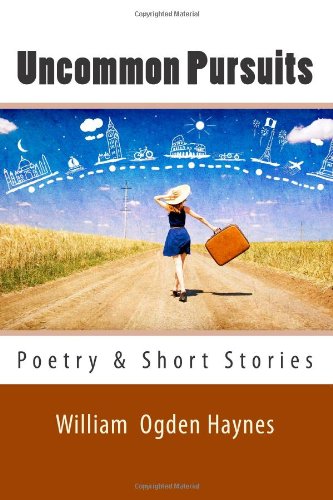
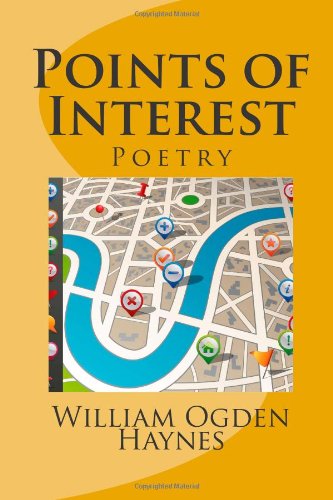
Two of Bill's books are available on Amazon, in both print and Kindle versions. Here are the Kindle links.

Amazon US Kindle link

Amazon US Kindle link
Bill writes from experience, and offers advice and encouragement to those who may have struggled trying to be published by traditional presses. His article is mainly about poetry books, but I think everyone will find that his analysis of traditional and new venue publishing makes fascinating reading. Take it away, Bill!

More Than One Way to Publish a Book

First, let’s be clear. If you have a hot novel or nonfiction book that will have mass appeal, the way to go may be to get an agent, contact major publishing companies, and receive the best editorial support, layout assistance, and marketing campaign possible.

On the other hand, certain genres such as books of poetry, flash fiction and short stories have a limited readership. Therefore, they will have limited sales and produce only limited revenue for an author and publisher. In general, only the small, independent publisher will invest the money and time in such niche markets.

Most small publishers print books of poetry as a labor of love, to support the arts and heighten their profile in the literary community. Poetry books are considered highly successful if they sell 500 copies. The average number of poetry books sold per author is less than 50.

Traditional Publishing: Poetry Book Contests

Publishers of poetry books typically have hundreds of manuscripts to choose from to make their quota of publishing only a handful of poetry books per year. Many small publishers are run by a single person who makes all the decisions about what to publish and when.

Most publishers conduct “contests” to determine which books make their publishing list.  In order to enter the contest, authors must pay an entry fee, typically $25-$50.  These fees are accrued from all entrants and may be used to award a monetary “prize” to the winner of the contest (usually a few hundred dollars), who also will have their book published on a timeline determined by the publisher. Entrance fees can also be used to offset the printing costs of the winning book.

Winning these contests is extremely difficult because of the number of entrants, limited number of books to be published, and subjective biases of the editor(s) who make the selection. Many of these contests take six months or more to announce the winners. In many cases, even if you win, there are other projects in the queue ahead of yours and it may be a year or two before the book actually sees the light of day.

Traditional Publishing: Book Production

Most poetry books are small and typically sell for less than $20.00. From this, the publisher must recoup the costs of printing, layout and editorial work, and make some profit from the sale of the book. In many cases, the royalties granted to the author are less than ten percent.

Traditional Publishing: Marketing

Small publishers have limited resources to invest in marketing a new poetry book. They post the new book on their website and may send an announcement to people on their mailing list. Rarely will they attempt to market the work nationally and internationally. In most cases, they do not offer an electronic version of the book.

The main marketing tool has been, and will always be, the author. The publisher will ask the author to engage in readings, book signings and other appearances at the author's expense. In some cases the publisher will help arrange these events, but in other instances it is up to the author to book events.

Sound impossible? Hang tight. There's hope!

On-Demand Publishing: A Growing Trend 

A relatively new publishing model known as on-demand publishing is growing in popularity. While there are many on-demand publishing companies (Lulu, Blurb, Wordclay, CreateSpace), I will use CreateSpace as an example in this article, because I have had experience publishing with them.

Companies like CreateSpace, a subsidiary of Amazon, work within a “publish on demand” model. Unlike traditional publishers they do not print hundreds of books and warehouse them until they are sold. CreateSpace simply publishes as many copies of the book as are requested by the author or demanded by customers. Using this model, the book will never go out of print and will always be in stock when demanded by the author or other consumers.

Most poetry books cost between $10-$20. Authors using CreateSpace set their own retail price for their book after being given a range of prices that are competitive on Amazon.com for the number of pages produced in the book. At CreateSpace, a book of poetry that has between 80-150 pages costs about $2.50 to produce.

As an author, you can order as many books as you like for that production cost and sell the books for the retail price. For instance, a poetry book that lists for $10 costs the author $2.50 and if he or she orders twenty copies it would cost the author $50.00. If the book sells for $10, the author makes $7.50 on each copy. If all twenty copies are sold, the author will net $150 (minus the original $50 paid for the books).

CreateSpace provides software for setting up the book layout and for designing a cover free of charge. If the author is comfortable with computers and technology, the free package is all that is necessary to produce a professional and visually attractive book. However, for those that are not technologically savvy, they also offer, for a substantial fee, several packages that include professional assistance in editing, layout and cover design. If you have to go that route, with a little online research, you can find a more affordable, still high quality alternative.

CreateSpace offers a marketing plan in which they make the title available on their parent web site Amazon.com. They also provide the software free of charge to convert the manuscript to a format compatible with Kindle. For a one time fee of $25 CreateSpace will market your book world wide on Amazon. The book will also be advertised on every major book seller (e.g., Barnes & Noble, Books A Million, etc.) and made available to public and university libraries. Regarding royalties for any books that sell from the Amazon website, the author will receive $3.85 for a book that sells for $10.

Is Self-Publishing Legitimate?

Is self-publishing on a platform such as CreateSpace a “vanity” press? It is in the sense that one could publish anything he or she wants with essentially no review by other writers.

But let's look at the "traditional" alternative. In a publishing company, an author’s work may be judged by a single individual or several reviewers who work with the publisher. They may be highly qualified critics of poetry or not, but still, the publishing house usually offers a limited scope of reviews. And yet, even though the publisher may even be the only one to review the work, no one calls the book a product of a vanity press.

On the other hand, you can use CreateSpace to present mainly pieces that have already been published in literary journals. The competition to get a piece published in these journals is intense because hundreds of poems per week are reviewed by the editorial staffs of these magazines. Many have acceptance rates of less than ten or even one percent.

In my first poetry book, Points of Interest, 28 of the 50 poems were previously published in literary journals.  In my latest book, Uncommon Pursuits, 40 of the 55 poems and short stories had been previously published in literary reviews. A book gains credibility when the work has been screened and selected by journal editors. In a way, journal publication gives more credibility than a limited review by one publishing company.

Who Might Prefer the On-Demand Model? 

  • Authors who write books that appeal to small or limited markets (e.g. poetry, short stories, novellas, flash fiction.) 
  • Authors who want to take work that has been published in diverse literary journals and present it in a single collection without having to send it again through a review process conducted by a publishing company. 
  • Authors who do not have time to invest years in submitting and resubmitting manuscripts to small publishers with a limited chance of actually securing a contract.  
  • Authors who do not want to face minimal odds of getting a manuscript accepted. The chances of a particular manuscript being selected depends reviewer preference, the strength of the competition, the type of book the publisher is looking for and many other subjective factors.  The process grinds slowly and at the end you could once again come up dry. 
  • Authors who would like to keep the majority of the limited profits from selling their work and not split the proceeds to profit the publishing company.  
  • Authors who want to maintain control over when their work is published and not be at the mercy of a publisher in setting the timeline for when the book will appear. 
  • Authors who would like to avoid the pressure from a publisher to market their book in a short period of time to recoup publishing costs. With publishing on demand the author is free to invest as much or as little time in marketing as he/she might feel comfortable with. 


Thank you so much, Bill, for sharing your insights with us today. While there are many advantages to the traditional publishing model, it certainly is not the answer for all authors. The same is true for non-traditional routes.

What choices have you made in regard to publishing? Have you run into difficulties with traditional publishers? Has your experience been similar to Bill's? Can you contribute your experiences with books other than poetry collections?

As always, I look forward to a lively conversation in the comments, and Bill will be here to respond to your questions and observations as well.

Wednesday, June 19, 2013

Writing Pitfalls – Edit Them Out! #TBSU

We all learned our share of grammar in school, and I doubt it was anyone's favorite subject. Now that some of us have become writers, we may be wishing we'd paid a little more attention. Trouble is, we were taught to do this or that just because it was THE RULE. Actually, good reasons lurk behind some of the rules.

If we may, let's agree to shelve the discussion of dialogue for another post. Variations in grammar are a fantastic, maybe the best, way to make sure each of your characters sounds like a distinct individual. But that's a whole topic in itself.

I've included a fun exercise at the bottom of this post. Feel free to jump down there first and try it out.

The Much Maligned Adverb!

Did you know that adverbs have only been part of the English language for about 200 years? Everybody got along without them before that, and many modern languages contain few adverbs even today.

The workhorse of every language is the verb. Adverbs aren't evil, but they often are used to prop up a weak verb. For example, he walked slowly instead of he ambled. The quickest way to improve your writing is to spiff up your verbs. Each adverb is an awesome and useful red flag!!

Make sure every adverb is essential. Evaluate each one, and throw out as many as you can. I initially wrote absolutely necessary in the first sentence of this paragraph. Essential emphasizes my point more clearly. You don’t have to throw out every adverb. Just the weak ones. For example, I can't think of a better wording than more clearly, so it gets to stay! See if you can eliminate most adverbs by finding stronger verbs.

The Dreaded Gerund

The technical reason to avoid -ing verb forms is... technical. The gerund is designed to indicate simultaneity. In other words, two things happening at exactly the same time. A proper use of a gerund would be, His blood pounding, he walked toward the monument. The whole time he's walking toward the monument, his blood is pounding! Yes!

An incorrect use of a gerund would be, Going to the store, I saw a cat. The whole time you were going to the store? The logic doesn't work. Sometimes you can rework the sentence to include the word as or when and the simple past or present tense. When I went to the store, I saw a cat. 

Why do gerunds matter? For two reasons. One is that even though the distinctions are minor, the subconscious mind of the reader will pick up the errors. They may have no idea what's wrong, but they will sense that something is off. Without realizing why, the reader may well think, "Hmm, this person isn't such a hot writer."

The second reason is even more subtle! Language has sound, and sounds matter even when we aren't reading out loud. Repeated -ing, -ing, -ing, especially at the beginning of several sentences, gets annoying. Poets sometimes spend hours working on the sound qualities of a stanza! Novelists can also learn to pay attention to how their words sound.

The Misunderstood Vague Pronoun!

Technical definition: a vague pronoun has no direct antecedent.  For example, There were two men in the camp. Okay, the sentence isn't wrong, but what do the words there were contribute?? Nothing, nada, zip, diddly squat!

Two men sat by the campfire. Ahh… much better! Now we can picture them. Whew! As in this example, often you can just throw the problem words away.

When I was teaching journalism, if I saw any of the combinations there are, there was, there were, it is, it was, this is, this was, that is, that was,  these are, these were, etc, I handed the article back for revision. Don't take my word for this precept. Ask Stephen King. The all-powerful PACING of your novel depends on eliminating the junk, and every single time (except in dialogue), these combinations are junk words!

To Be or Not To Be?

Why is the verb to be frowned on by creative writing teachers? The simple answer is that is, was, were, are give a writer their best red flags for finding and eliminating weak sentences.

Every writer uses the verb to be all the time. Everyone. If you've already tried the exercise at the bottom of this post, you know what I'm saying. But, using to be seven times on a page is not the same as using it fifty times!

In almost every sentence, you can find a more vivid, lively verb than to be. The to be verb forms are also a great red flag for -ing verbs and for vague pronouns. They may also signal passive voice. Four at one blow!! Weak, -ing, vague, passive — kaboom! Gone!


Pathetic Little Anemic Verbs

Your English/creative writing teacher may never have mentioned this problem. Some verbs in English have been around for so long that they have lost all specific meaning. A few examples are have, do, go, and move. Think of all the ways we use the verb have: I have two daughters [gave birth to]. I had an egg for breakfast [ate]. I have a blue car [own]. He had a cow [what???].

When you find you've used one of these meaningless verbs, just substitute the more precise verb that says what you meant in the first place.

A Fun Exercise

Woohoo!

Preparation:

  • Find a novel you like, preferably the same genre you write. Photocopy a double page from the middle of the book. This exercise is MUCH easier using a non-electronic, paper copy.
  • Gather three highlight pens of different colors. 
  • Highlight all the adverbs in one color, all the -ing words in another color, and to be verbs in yet another. 
  • Now look near the to be verbs and underline any vague pronouns you find. 
  • Count how many you find of each and record on a piece of paper the number of:


adverbs
-ing words
to be verbs
vague pronouns


Your Turn!


  • Take about two pages of your manuscript. Turn them upside down! Try not to read the text. Often we glide over problems because we’re so used to them.
  • adverbs: Look for any word that ends in -ly and mark it with a highlight pen. Do you have a lot more color than the sample?? If you do, try to get rid of enough of yours to come close to the count in the sample.
  • -ing words: Highlight any word with -ing (some will be okay words, like spring, ignore these in counting). Compare with the sample. Remember, you can keep some, just not too many. Try to match or beat the number in the sample.
  • to be verbs: Highlight every form of the verb to be. Compare with the sample. Are you close, or even better? 
  • vague pronouns: Turn the page right side up and look carefully for vague pronouns near the to be verbs. Underline them. Now check your pages against the sample. How do you compare? You really don’t want ANY vague pronouns, and almost no to be verbs, so take a stab at eliminating ALL of them.


For the last step, you may want to start over with a fresh copy of your manuscript. Type in all the changes you’ve made from the above exercises, print out a new copy of the two pages, then try this last one:


  • weak verbs: Stay right side up. Underline EVERY VERB. Examine each one – say it out loud, listen to the sound; does it communicate an emotion? Does it create a vivid picture? Replace any verbs that have lost their oomph. Remember that the verb carries the sentence!

Whatever you are already doing to your own satisfaction, pat yourself on the back. If you have fewer gerunds than Stephen King, woohoo! Remember that each of these foibles persists in everyone's writing. You just want to eliminate enough weaker constructions that you fall in line with your own favorite authors. 


Whew!

I can hear you screaming! "Who has time to do all this work? You can't mean for me to highlight every page of my manuscript like this!"

No, I don't suggest you spend the next three years highlighting and analyzing your manuscript page by page!

What you will find if you do this exercise even once is that you will develop a sensitivity to weaker writing. You'll be able to pace through your whole manuscript and eliminate many minor writing problems. As you edit the current manuscript, you'll internalize the red flags and the signals, and your next first draft will be closer to a third or fourth or even a final draft.

If you only want to write one book, you may prefer to pay someone else to edit it. If your goal is to produce many novels, putting in the time to fully edit the current manuscript will pay off for the rest of your writing career.


Did you try the exercise? Was it fun? Did you learn something about your own writing? This exercise is always a favorite at the Novel Writers Workshop. Even writers who are dismayed at first are also heartened to realize that fluent and powerful writing is within reach.

What writing hints can you share with fellow writers? Do you have tips and tricks that speed your manuscript along? Let's have a lively discussion in the comments! I look forward to hearing your thoughts.

Check out these related posts:

Three great blogs, presented in the grand tradition of The Blog Scratchers' Union! #TBSU

Sunday, June 16, 2013

All My Fathers #TBSU

Happy Father's Day, Dad! My father, Louis Joseph Moran, Jr., died 31 years ago, on June 13, 1982. The proximity to Father's Day makes the day bittersweet.

Me and my Dad, in student housing in the fifties.

I idolized my Dad, and I'm pretty sure he's turned up, subconsciously or consciously, in the male characters in all my novels. I've written twice about fathers explicitly, in Ophélie and Twelve Nights. Both are complex men who embody aspects of my own Dad.

The father in Ophélie doesn't appear directly in the story, but his legacy shadows Ophélie's life. When she was a girl, he dove into a river in front of her, to try to save a woman from drowning. He died, and Ophélie feels abandoned. My father died of cancer when I was 30. Though the circumstances are different, in some primitive emotional core, I also felt abandoned.

Link to an essay on Sir Toby

Aggie and Angela's father, Gordon, in Twelve Nights is a comic character, modeled loosely on Sir Toby Belch in Shakespeare's Twelfth Night. Sir Toby marries Maria, and Gordon's girlfriend's name is Mary. Like Sir Toby, Gordon is a problem drinker. I indulged in some wish fulfillment in the novel, because Gordon joins Alcoholics Anonymous and begins to make amends. In real life, my mother was the drinker, and she didn't join AA. My Dad didn't drink much, but neither did he curb my mother. My Dad was also a prankster who loved to tell jokes. Families are complicated, both in real life and in fiction.

Other male characters also embody aspects of my Dad. Jimmy Buko in Twelve Nights and the Master in Beauty of the Beast are both powerful, hardworking, hard driving men. Both also retain their compassion and empathy, empowering those around them. My Dad rose from a high school dropout before World War II, to the Dean of Arts and Sciences of the University of British Columbia. He was beloved for his championship of students and university office workers.


Bran in Fantasy Impromptu is modeled directly from a beloved friend. Keith Ditto was a principal male dancer in ballet companies around the world. Before he died, he asked me to put him in a book, and I did. Along with Keith's love of music, Bran shares my father's love of learning. My Dad was a psychology professor for many years. Bran is also a wise teacher, always a step ahead but sensitive to the needs of Chantal.

These are some of the Dads and Dad-figures in my novels. Happy Father's Day to them all, and to all the Dads out there enjoying your special day! Would you like to share a story about your Dad? If you're a writer, do your male characters reflect pieces of your father? Fire up the barbecue and grab a beer. Let's have a lively conversation in the comments!


Check out these related posts:

Three great blogs, presented here in the grand tradition of The Blog Scratchers' Union! #TBSU

Friday, June 14, 2013

Let's Not Be Twits on Twitter! #TBSU

Three friends recently and separately have mentioned that they don't get the point of Twitter, or that they aren't sure how to make the most of it. I've ended up emailing my approach to tweeting to them, and they've tried it and liked it. So here's the Handy Dandy Carole Remy Twitter Plan! Tested and approved by three (count 'em three!) non-empirical, non-scientist friends!

Warning, this takes a bit of time. I don't use any paid services, only TweetDeck to schedule tweets. I love doing it all myself! The people I meet are awesome and often turn into friends over time.


To Get New Followers


We all want Twitter friends who follow back, and who Retweet us every once in awhile. The best way to find them is to Retweet and follow them yourself first! BTW, 'retweet' looks strange, even with unlimited characters, so I'll switch to RT.


  • Go to 'Home' on your Twitter tab and start browsing. Or go to the profile of someone you know and find people who have RTed them. 
  • When you see someone interesting, click on the person until you get to their Profile page.
  • Check that they have recent tweets, and that they RT other people, not just send out tons of self-promotion.
  • Find something you want to RT of theirs, preferably one of their direct tweets and not just something they retweeted.
  • RT it and follow them. 
  • Send them a message (not a DM) that you just RTed and followed them. Add a personal note if you can. "I love your blog," if it's true. "Cute Dog!" if there's a dog! I always add, 'Nice to meet you!'
  • You now have about a 90% chance that they will follow you back. 
It does take awhile, but it's worth it. If I do this for 30 minutes a day, I can pick up 10-15 new followers, and they stick! They are real people, because I picked them carefully in the first place! Also, I try to find people from all over the world, and not only writers.

Click here to follow me, if you want. I'll follow back!
Woohoo! Have fun! I actually love doing this! I've met so many people who feel real to me, even if we only communicate on Twitter.


You Have Followers! What Now?


Now you get busy RTing. I have various Lists on Twitter. The Go To List for me is Frequent RTers! These are the 100 or so people who RT me consistently, and they get the royal treatment. At least once a day, I run down the list and RT everything that looks interesting. Yes, I do RT advertising of authors' books, but sparingly. I try to RT something from at least half of the people on the list every day. This part is pretty quick, maybe 20 minutes.

I'm also part of The Blog Scratchers Union, a group of bloggers who support each other. At least once a day, I search #TBSU on Twitter, and RT most of the tweets. You are welcome to join the group! Seumas Gallacher started it, and gives a full explanation here on his blog.


What to Tweet?

I have a simple rule for this. Tweet what you like to read.


  • I like quotes, so I look for fun quotes in Bartlett's and I tweet them. 
  • I appreciate when people give me a heads up for an interesting post they wrote awhile ago, that maybe I didn't catch at the time, so I tweet the posts from my archives that have enduring interest.
  • I appreciate hearing about free books on Kindle, so I RT and tweet those notices, though I try to check out the Amazon page first to make sure the book is a good read.

  • I LOVE it when someone spontaneously tweets one of my blog posts, so I try to find and tweet a few new blog posts every day.

  • When someone writes a post I really enjoy, it goes onto the list along with my own archives, for rotational tweeting.
  • Here's my sneaky way of slipping in a bit of advertising. When I send out an archive that relates to one of my books, I tack on the Amazon link. That's it. NO direct, "Buy this amazing book!" Just a little link added to something of general interest.


Organize It All Efficiently

All this could be a ton of work, so it pays to be super-organized. I keep a Google Drive document of "Tweets to Use Again" open all the time on my desktop. If I see something to put in rotation, boom, it gets copied into the document immediately. The document generally has 100-200 available tweets, including quotes, my archives, and other people's archives.

On to Tweetdeck... I schedule one tweet per hour, 24/7. Sometimes I don't schedule for a few hours or a day, and that's fine too. I just go to the Drive file of available tweets and copy and paste whatever strikes my fancy, an hour at a time, changing the wording just a bit each time. After I use a tweet, I highlight the background so I won't use it again too soon. If a tweet hasn't appealed to me for awhile, I bump it out of the rotation.

That's it. It's really pretty easy, and doesn't take more than a few minutes a day to schedule something for once an hour. Then I relax and only tweet stuff occasionally that appeals to me in the moment, usually something interesting that I've read or an RT from someone else.

Say Thank You!

This is the part that still bogs me down! I often get 20 or so new followers to thank every day, and another 40 or 50 RTs and mentions. Whew! I make lists, but haven't figured out a way to do that except by hand. I batch up the actual thank you tweets, but hand check each person's profile before I add their name. Sometimes I need to follow someone who has RTed me, or someone who has followed me first. Unfortunately, I can't remember all the names, so I always check!


My latest innovation is to print up an A to Z page with lines, to add @names of RTers and mentioners in alpha order. My hope is that I can keep track and thank people once or twice a week, and won't need to make a new list every day! Today with #FollowFriday is the first try for this. I'll let you know how it works.

If you have ideas about how to thank people personally, that don't involve being tied to the keyboard 24/7 or handing over control of following and unfollowing to a third party, PLEASE let me know!

Plea for Help!

That's the end of the Twitter post, folks! And the end of my limited social media tips, such as they are... Now, I'm asking for your help! I do NOT understand Goodreads—HELP! I kind of like Google+, but clearly haven't gotten the hang of using it—HELP!

My Facebook fan page, sigh...—HELP! There's a new Like-My-FB-Page button you can click on this page, right below the Skelat badge on the top right. Or, better yet,


Maybe if we all stick together, we can get the hang of this social media thing! What's your favorite medium? Have you written a blog post about it? Feel free to share links to your social-media-tips posts in the comments. Whew! And thank you again, both for reading this blog so faithfully, and for helping me figure out what the heck to do with the other media!

Check out these related posts:


Three excellent blogs, presented here in the grand tradition of The Blog Scratchers' Union! #TBSU