Wednesday, June 12, 2013

Live a Creative Life, One Sudsy Glass at a Time! #TBSU


Do you use your creative capacity 
as part of your everyday life? 

Could you can recognize and get greater satisfaction 
from the things you are already doing? 

Can you turn every act into a time 
to think, act, and simply be creative?

We can make more opportunities to grow creatively, and to define creativity in a way that makes it accessible to us all the time!

What are you already doing that fulfills your need to be creative? 

It could be – I hope it’s true – that you are already living more creatively than you think.

As a first step, let’s look at the difference between an ordinary, everyday experience, and a creative experience, what we might also call an aesthetic experience. An example of an ordinary experience might be somebody poking a stick into a fire. The person might say, “Well, I wanted to get the fire to burn a little better.” 

What if the person focuses on the fascination of watching the interaction between the flickering flames and the coals that crumble at a touch? What if she notices the sensation of heat on skin, the smell of wood smoke, the crackle of a sizzling twig?! Voila! She is having a creative experience!

Attitude is Everything!

The actual experience is not the important thing. Our attitude toward the experience is what defines it as ordinary or extra-ordinary. Buddhism does a great job with this concept. One of the main ideas of Buddhism is the principle of mindfulness. Basically, the message is: Pay Attention! 


If you are washing a glass, savor the bubbles and the hot water. Rub your thumb against the edge and listen for the squeak. Use a nice-smelling dish soap, something you like, and sniff the lingering scent of the soap on your hands a few minutes later. Pay attention!

Don't Live an Antiseptic Life! 

Our modern lives can seem antiseptic. We can get preoccupied with details, and yet paradoxically not get much pleasure from them. We write a check to pay the gas bill, but we don’t notice the feel of the pen in our hands, or the silkiness of the ink as it flows onto the paper. 

Think of your great-grandmother’s rocking chair. To her, it was a convenient place to sit, an ordinary, everyday, taken for granted part of an ordinary life. But to us, now, that exact same rocking chair may be a work of art, a beautiful antique. We almost hesitate to sit in it, it’s so precious. Do you see the irony here? What if we could transfer that future reverence into the present moment, and still maintain the utility? That would be living creatively.

A Fun Challenge!


I want you to do something right now. I want you to wiggle around a little in your seat. Feel the steadiness of it against your back. Feel how well it supports you, how easily you can relax, feeling secure that it isn’t going to collapse under you. This is a little silly, but I want everybody to say, “Thank you, chair!” Everybody now, “Thank you, chair!” 


Maxi instinctively savors every sensation! We can too!
You know what, we just had a shared aesthetic experience, a little moment of creativity in the middle of sitting at a computer with you reading, me writing, a blog! Feel free to keep enjoying a creative adventure with your chair as we continue.

In fact, continue your day and evening enjoying EVERYTHING as a creative adventure! What's your favorite sensory experience? What are the everyday tasks that you savor? Send your ideas and inspirations via the comments! I look forward to reading your thoughts!

Check out these related posts:


Three creative blogs, presented here in the grand tradition of The Blog Scratchers' Union! #TBSU


Tuesday, June 11, 2013

Why Wait to Be Creative?! #TBSU

Do you need a perfect life in order to be creative? Of course not. Do you need to follow in someone's footsteps in order to be creative? Of course not. Yet all to often, we wait for the perfect moment to inspire us, or we follow the advice of a guru, however well meant.

Let's take a look at how some famous writers have found ways to jump start their creative process. My two points here are, number one: you don’t need a perfect life in order to be creative. And number two:  you can’t necessarily follow somebody else’s guidelines. Part of the challenge of living creatively is to figure out what works for you, and then to trust and stick with that.

You Don't Need a Perfect Life!

Here’s a “you don’t need a perfect life” example. I want you to try to guess what these writers have in common, in terms of creative process. Let’s start with John Bunyon, the man who wrote Pilgrim’s Progress. Does anyone here know anything about his writing process?... Okay, let me add someone else who shares at least one aspect of the process with Bunyon— Cervantes, the author of Don Quixote. Any guesses?... Okay, here’s number three, John Cleland, who wrote Fanny Hill...  How about O’Henry? Can anybody think what all these writers have in common?... Okay, this one may give it away, Oscar Wilde...

Link to The Ballad of Reading Gaol by Oscar Wilde.

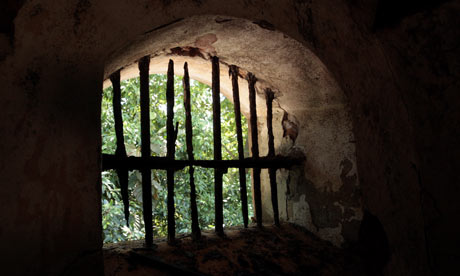
Did you figure it out? They all wrote in prison, hardly what we’d call ideal circumstances. Bunyon was imprisoned for 10 years for preaching, and he wrote 10 books there, including Pilgrim’s Progress. Cervantes was captured and held for ransom by Algerian pirates in 1575, and was in prison again briefly in 1597, when he wrote parts of Don Quixote. Cleland, O’Henry, and Wilde also wrote in prison. So the excuse that our lives aren’t perfect enough yet for us to be able to live creatively is just that – nothing but an excuse. Creativity is available everywhere, even in prison.

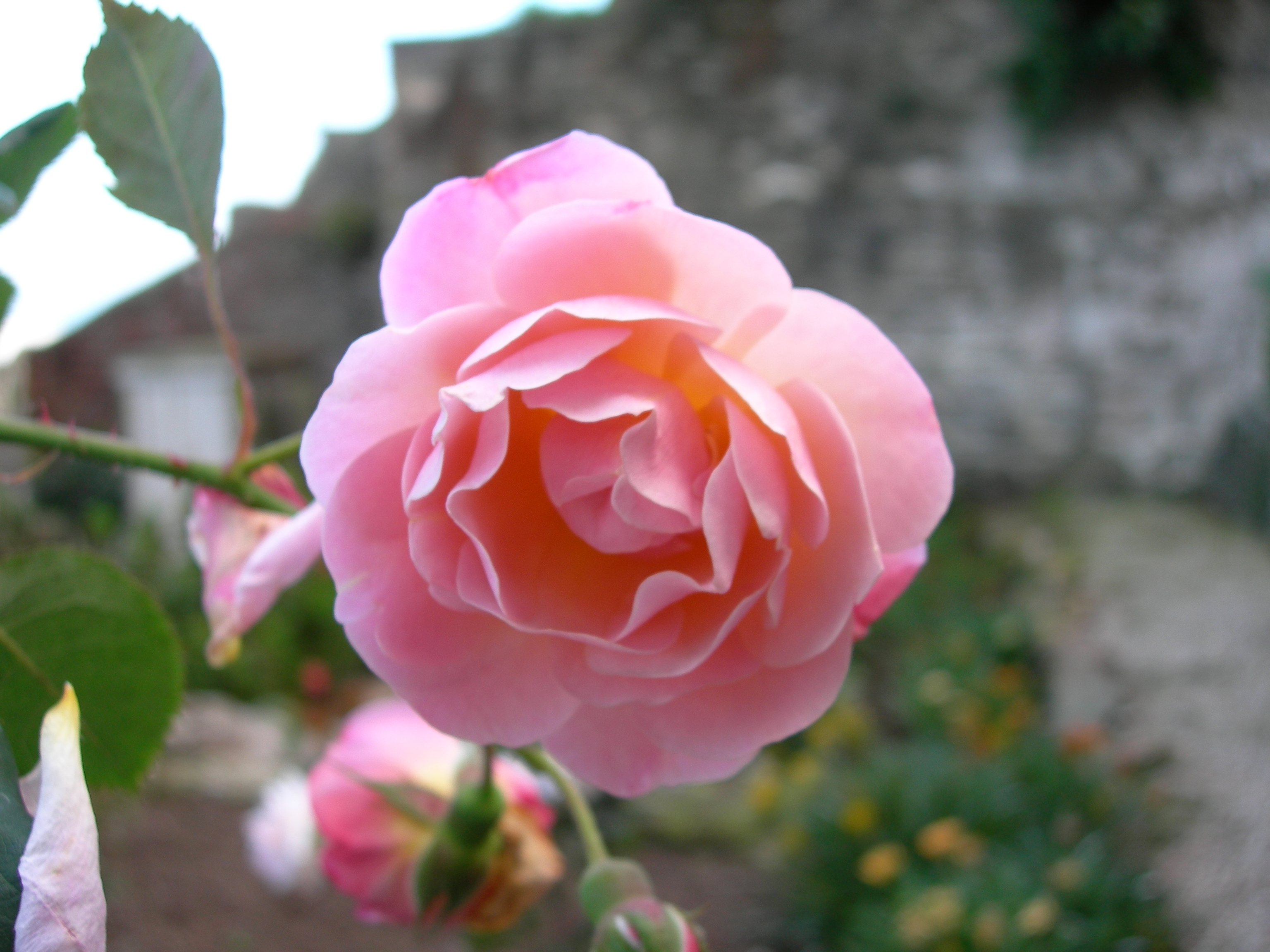
Rose in bloom at Alcatraz. 

As a side piece of information, I have read that there is increasing evidence that the single greatest factor in reducing recidivism is to encourage inmates to express themselves creatively, whether in writing, visual arts, or performance. If you want to help people stay out of prison, help them discover a creative self.

Think how much easier life is for each of us. We’re not in prison to start with. If creativity can keep criminals from committing crimes, think what it can do for you and me!

Strange and Unusual Writing Habits!

Here are some more writers who found interesting or unusual ways to find time, or locations, to be creative. Two who wrote in the bathtub: Ben Franklin (he wrote there because he had one…) and Edmond Rostand, who wrote Cyrano de Bergerac (he wrote in the bathtub for privacy).

Not sure this was Ben's actual tub, but it looked something like this.

Thomas Wolfe was a tall, large man, and he wrote on top of the refrigerator, with his stomach pressed into the door. Mae West? Perhaps predictably, she wrote in bed. 

More on Les Miserables.

Let me give you one last example to show the lengths a creative person might go to in order to force himself to think creatively. Victor Hugo, the famous French novelist, found he was easily distracted when he tried to write. So he would take off his clothes and give them to a servant, telling him to come back several hours later. Then he would write, naked and alone in a room. You probably all know his most famous work, suitably titled Les Miserables.

Do these Writers Inspire you?

The point of these anecdotes is that number 1: there’s no excuse not to live creatively, even for someone in prison, and certainly not for you and me.

And number 2: you’ll have to hunt around and experiment to find ways to live your own life in your own uniquely creative way. Nobody can tell you the 'right' method, and if anyone tries, frankly, I’d run pretty fast in the opposite direction.

I’ll close with an observation that my sister made a couple of days ago. We were doing the instant message thing on the Internet. I told her I was writing a post on Creativity, and she wrote back, “I’d love to be a creative liver.” We both looked at what she’d written and started laughing. I’ll leave you with this challenge, if you can’t figure out how to be a creative liver, maybe you can learn to be a creative pancreas, or who knows, how about a creative spleen?

What jump starts your personal creativity? Music? A certain location? A particular time of day? Please share your thoughts, suggestions, and questions! I look forward to an interesting and lively conversation!

Check out these related posts:


Three great blogs, presented here in the grand tradition of The Blog Scratchers' Union! #TBSU

Monday, June 10, 2013

Guy-Plots and Girl-Plots: Novel Writers Workshop #TBSU

What's the quickest way to improve your plotting? Men, try thinking like a woman! Women, try thinking like a man! It’s a cliché that men write plot and women write character, but it’s also often true. So, men writers – pay special attention to the girl-plots advice! Women writers – pay close attention to the guy-plots advice! Forgive the gender oversimplification, and write that Best Seller!


Guy Plots


One plan for a novel is what I call the guy-plot — action rather than character oriented. Here are two ways to think through a guy-plot. If you aren't working on a manuscript at the moment, think through an imaginary one. Who knows, it might become a best seller!


Plan A


As defined by Syd Field in Screenplay (fantastic book, BTW, even if you never write a screenplay), “A plot point is an incident, or event, that ‘hooks’ into the action and spins it around into another direction.” Locate the plot points of your novel. Do you have a plot point near the beginning, about half way through and near the end? (That’s the minimum!)

Opening: _________________________________ (hook)

Plot point 1: _________________________________ (flip)

optional twist: _________________________________ (flip!)

Plot point 2: _________________________________ (hook and flip!)

optional twist: _________________________________ (flip!)

Plot point 3: _________________________________ (hook, flip, and climax!)


Plan B


Construct a conflict staircase for your manuscript. Silly example: Artha loses her job as a waitress. Now she can’t afford to go to law school at night. Her best friend is arrested for shoplifting. She bails her friend out, but now has no money at all. The next afternoon, her daughter is kidnapped on her way home from school… and poor Artha can’t pay the ransom. She goes to her law professor, … [I said it was silly. Note the progression from worry about self, to worry about friend, to worry about child. Build the stakes – build the tension!]

(climax)_____________________

_____________________ 

_____________________

_____________________

_____________________

 (start) _____________________ 

Do YOUR stakes get higher and higher as the plot progresses?? You may need more or fewer steps than in the example.

If you are reading this post with a writers' group, stop now and compare notes. Have you realized anything about your manuscript? Can you jazz it up to a best seller plot?! 


Girl Plots


Here’s a character driven way to think about plot:
  • Throughout a story, characters connect and disconnect. 
  • Disconnecting produces tension.
  • Attempting to reconnect produces plot.
  • Connection leads to resolution and reader satisfaction.

This simplified structure is most obvious in romance novels (which could explain why they sell more copies than any other kind of book). But any story can be examined through the lens of connections and disconnections. Think of the movie The Fugitive, with Harrison Ford and Tommy Lee Jones – an action movie lifted to high drama by the growing connection between pursuer and pursued.

In Crafting Short Screenplays that Connect (another excellent resource for all writers), Claudia Hunter Johnson suggests several possible scenarios:

discovery: the character makes a discovery that makes a difference to the character

decision: the character makes a decision that makes a difference to the character

boxing match: one character wants what another character does not want to give

improbable connection: a plausible but not predictable pattern of human connection

I would add:

serial: a character tries repeatedly to connect, with anybody! [Looking for Mr. Goodbar]

interpersonal: two characters struggle through connections and disconnections

long-term: a connection slowly grows between two characters

These scenarios are all intertwined, and chances are you will use several at various times in your novel.

Ask yourself these questions about the major interactions in your novel:


Who connects? 

Who disconnects? 

Whose relationships go back and forth, 
connecting and disconnecting? 

Again, if you are working with a writers' group, you may want to stop now and discuss your various manuscripts in relation to these questions. 

Are You More a Guy-Plotter or a Girl-Plotter?

Have any of these questions sparked thoughts about your own manuscript? Do you write more plot driven or character driven novels? Do you aim for a balance of event-tension and character-tension? Could you add just that bit more guy-plot to propel readers through your story? Could you add just a bit more girl-plot to hook readers into your characters? Please share your ideas and questions in the comments. I look forward to a great discussion!